

Curating them makes them permanent qualities of our data. Curated results become persistent fragments - metadata pinned to the asset. Subsequent runs see them as context.
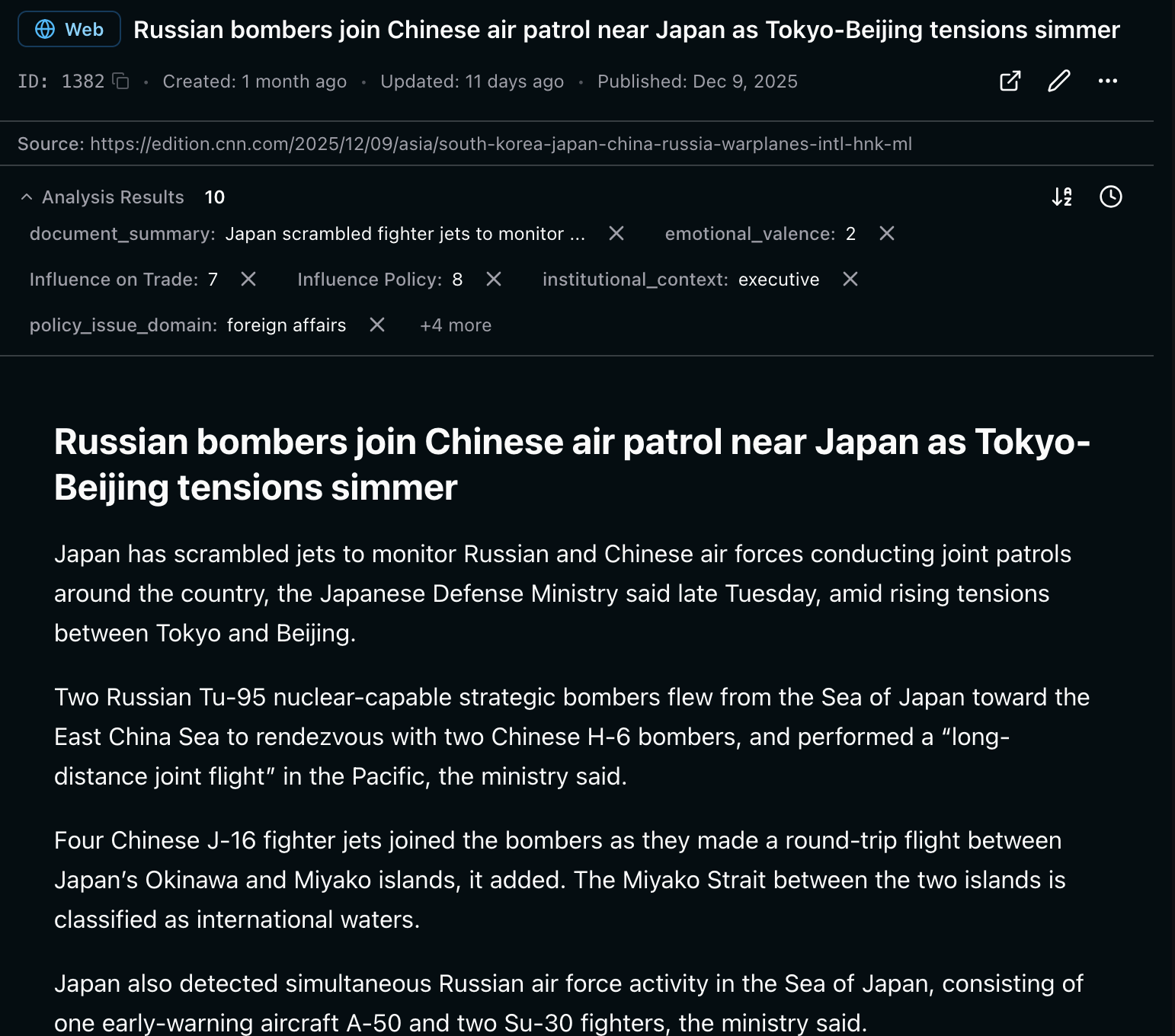
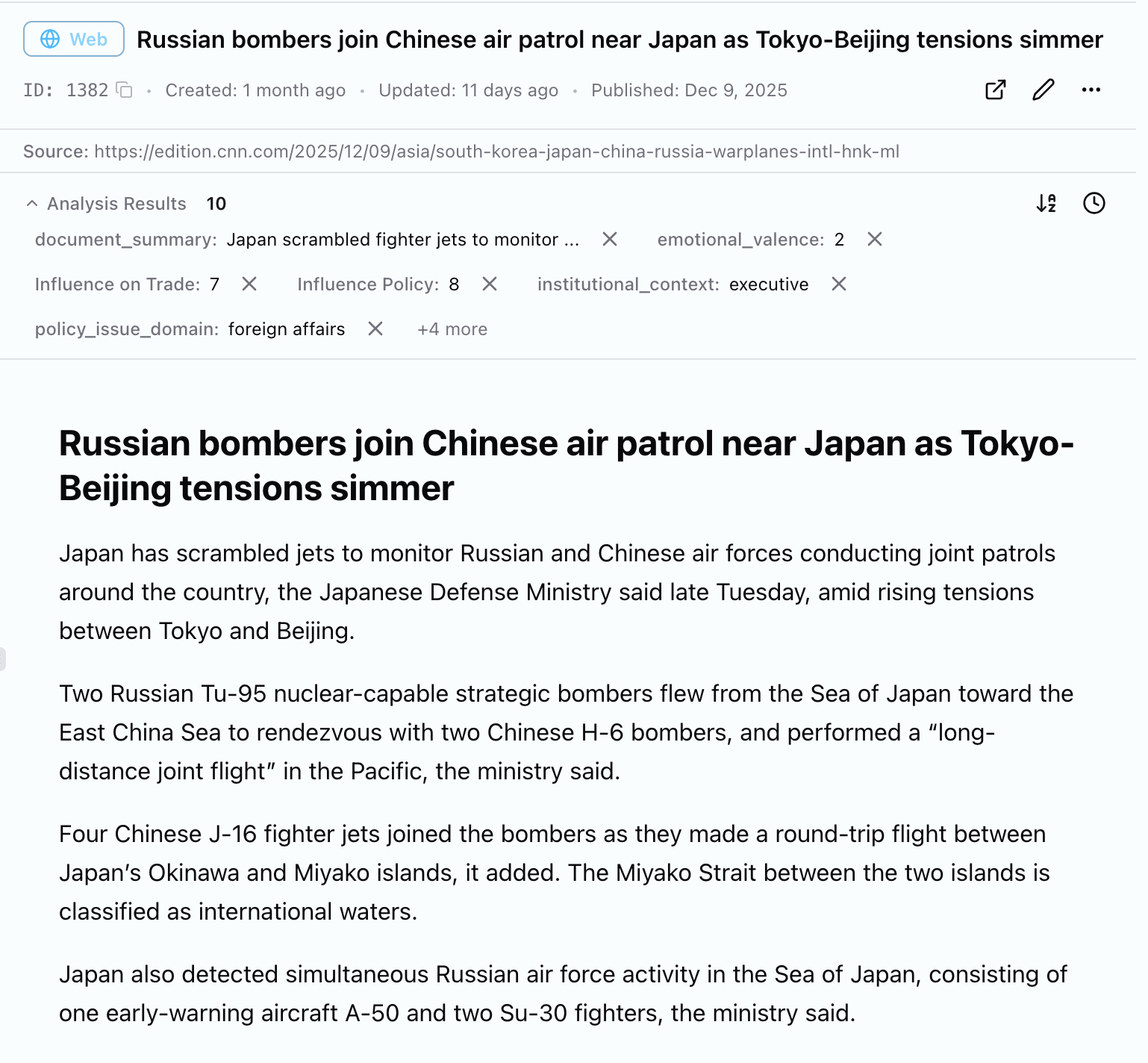
Annotations
- Temporary analysis results
- Tied to a specific schema run
- Can be deleted or re-run
- Not visible to subsequent analysis
Persistent Fragments
- Permanent asset metadata
- Survives schema changes
- Included in future analysis context
- Builds cumulative knowledge
How to
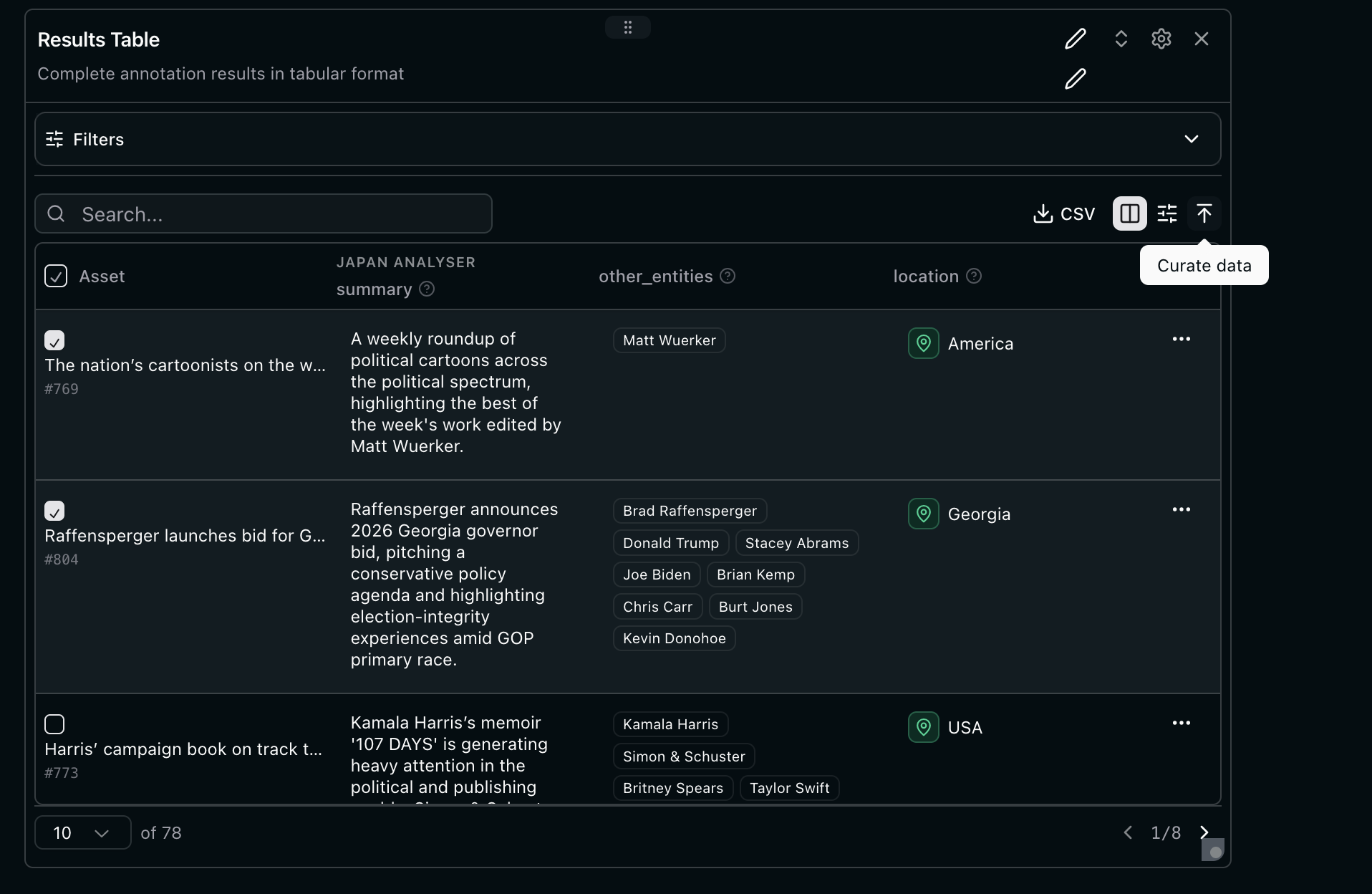
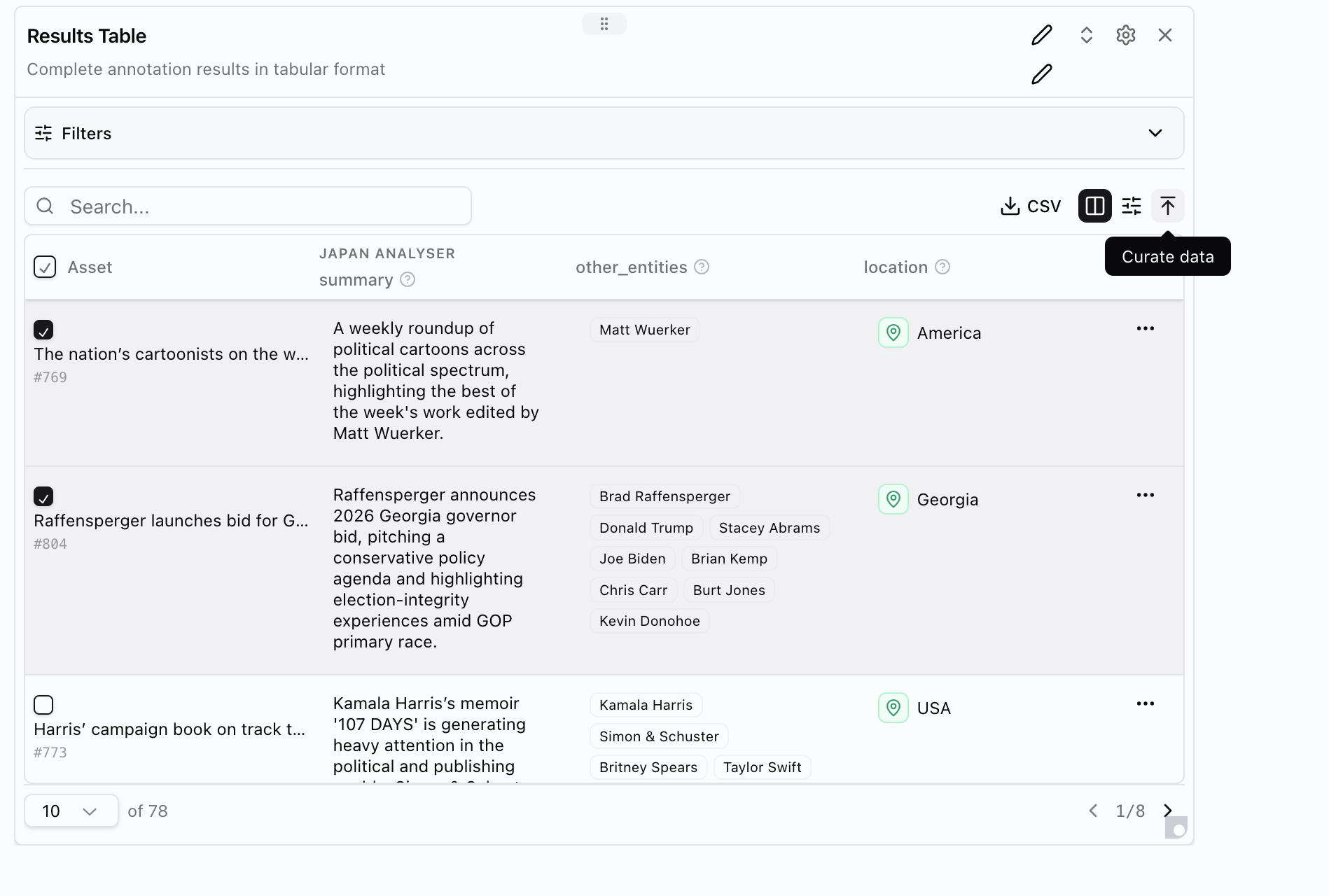
From the results table of a run dashboard:- Review the extraction - Check it’s accurate and useful, set filters
- Click “Curate” - Converts annotations to persistent fragments
- Confirm - Fragment is now attached to the asset (see above)
Related
Running Analysis
Apply schemas to your documents
Schemas
Define what to extract from documents
Assets & Bundles
Upload and organise documents
Dashboards
Visualise results with charts and tables